
 Posted by
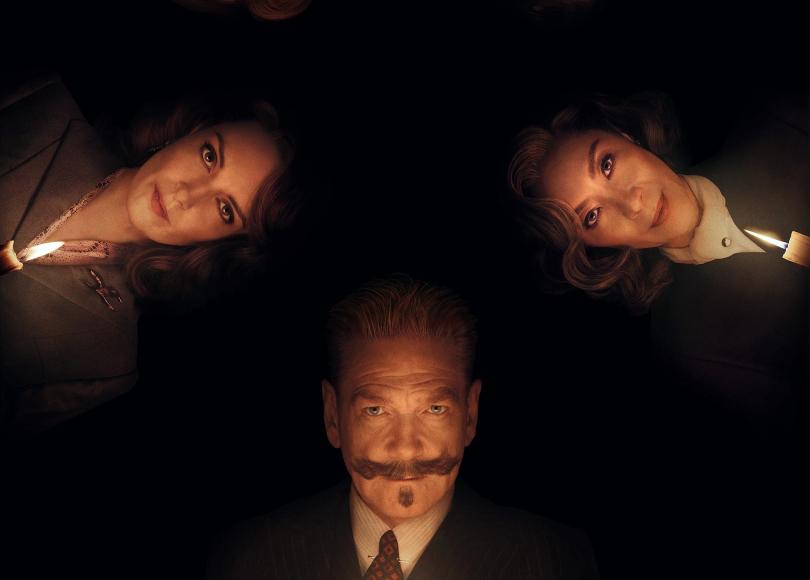
 A HAUNTING IN VENICE; 2023; Mystery/Horror; Theatrically released September 15. 20th Century Fox. 104 minutes. Rated PG-13.
Directed by Kenneth Branagh. Written by Michael Green, based on “The Hallowe’en Party” by Agatha Christie.
Starring Kenneth Branagh, Michelle Yeoh, Tina Fey, Jamie Dornan.
After the on-screen events of Murder on the Orient Express and Death on the Nile, along with countless unseen cases, Hercule Poirot is retired and attempting to live a quiet life in Venice, eating chocolates and gardening. He’s tired, troubled, and haunted from the death that has continued to follow him across two wars and the personal deaths he was called upon to investigate. Of course, as it wouldn’t be a Poirot movie without it, the world famous detective is mostly unwillingly pulled into more death and mystery. A great case it is: a spooky, deliciously dark tale of history hitting against the present; quick moving, sharp witted, and wonderfully shot to boot.
Agatha Christie’s most famous detective (perhaps the most famous in pop-culture overall after Sherlock Holmes, and maybe Batman if the Caped Crusader counters) has been adapted many times over a multitude of mediums. As director and actor, Kenneth Branagh has brought the Belgian to the silver screen with two previous film adaptations. No matter how the films on the whole turned out, (the short: I like Murder, hated Death) the massive-mustached detective was a joy to watch. Even in detesting Nile, I was eager to watch more Poirot. Moving from the more famous novels into the less trod of 1969’s The Hallowe’en Party (and from what I’ve read about it, taking massive liberties with a non-great “I owe so much in taxes time to push one out” Christie), Branaugh crafts what is easily the best of the three.
The story, or what I can give to you – it’s a mystery so no tipping of the hand from me!
It’s Halloween, 1947 in Venice, Italy. Poirot (still Branagh in top form, clearly enjoying the quirks of the meticulous detective), enjoying retirement and avoiding those seeking his experience with the help of a bodyguard (Riccardo Scamarcio, John Wick 2). The only person to get through: Ariadne Oliver (Tina Fey, relishing in a 40s screwball mid-Atlantic-accented quick-talk style), a mystery writer who had gained fame in adapting Poirot’s exploits, but now in a losing streak (Fey and Branagh have wonderful chemistry). In research for her next book, she invites Poirot to witness (and debunk) a séance led by enigmatic medium Joyce Reynolds (Michelle Yeoh, fresh from her EEAAO Oscar-win). She’s attempting to contact the deceased daughter of an opera singer (Kelly Reilly, The Cursed). Also trapped in the home are a troubled doctor (Jamie Dornan, returning from Branagh’s Belfast), his precocious son (Jude Hill, also returning from astounding debut in Belfast as Buddy), a housekeeper (Camille Cottin, Killing Eve), the dead daughter’s former fiancee (Kyle Allen, West Side Story), and others. Including, possibly… ghosts?
The home is known for being cursed after doctors and nurses locked up children (said possible ghosts) to die during a plague. This background is wonderfully told via shadow puppets (like Candyman a few years ago) during the book titular Halloween Party. Literal hauntings aside, Poirot, the suspects, and the victim(s ?, I won’t tell) are haunted metaphorically by the recently ended World War II, their own choices, or choices made for them. There is a melancholy sadness that permeates from every character, and from the walls that close them in.
These looming walls, crowded rooms, and lost-opulence are a character in-and-of themselves. Gone is any of the glaring artificially of the previous entries. Murder mostly looked great (and is a highlight 4k disc in how pretty it looks), with some green screen dings and Death of the Nile was a digital nightmare, so distracting that it further drowned an already sunk boat from a terrible script. A Haunting in Venice’s mostly singular location of a closed-in half-dilapidated, sprawling former orphanage, now sad and empty dark-bathed palazzo on Venice canals (contrasted against the open sun-light piazza’s of the first act), looks and feels real. Thanks to cinematographer Harris Zambarloukos, every worn-brick carries history and the set-design builds a lived-in-for-centuries look. The claustrophobic practicality leans in on the characters and the audience, building the dread.
And there is palpable dread. Branagh hasn’t spent much time in the horror genre. In the early 90s, he experimented with 1991’s Dead Again (a fantastic mystery with horror elements) and the 1994 Frankenstein adaptation (which I own but haven’t seen), but generally steers away. Too bad, as A Haunting in Venice shows, he has the ability to make something in genre. It’s a mystery, first and foremost, but there is a high level of horror within its bones. Mystery and horror are close cousins, after all. Dark rooms, weird sounds, questionable activities, MURDER! Gialli (calling Tony Kay!) are very much murder-mysteries, sometimes true mysteries with real clues and suspects, or all too often a near random explanation and killer. But the idea is there, absolutely drawing on Christie’s type of storytelling. This is still seen in the modern era with the Scream series being just as much about “who is the killer” as it is the kills. Last year’s Bodies Bodies Bodies was a Gen-Z laced old school murder mystery as well (to great results, I loved that).
I digress. Branagh crafts a tense atmosphere, on-edge enough to perk up this horror-addict. He might lean a little too much into a few tricks – a drinking game of Dutch angles and fish-eye lens would kill most people – but can’t begrudge that they work. A solid sense of mood between these camera set-ups and just-right lighting (it’s dark, but not in the “turn a light on, I can’t see anything!” way). There are more legitimate scares and terror sequences in A Haunting in Venice than there were in last week’s The Nun II. I’ll even admit to a jump scare or two having the intended effect!
I lamented Michael Green’s on-the-nose scripting for the previous adaptations, especially the glaringly obvious Death on the Nile, wishing Branagh would replace him for further entries, I’m glad to report he presents a far better script. It’s tighter by far, and moves with a pointed pace (let’s also thank Branagh for directing this forward as well; it’s a full half hour shorter than Nile). There are some “that set of lines could have been worked a little more” but it’s not as direct or groan-worthy. I appreciated the build of the clues this time. I caught most, and guessed in-some-way how they were used, but I didn’t piece it all together. But honestly, I wasn’t trying. I’d rather let them stew; if I start to think about it too much I’ll shift focus from the film itself. It’s fun to try to figure it out as being pulled along, less fun to obsess.
Kenneth Branagh’s third Poirot film is the best of them. It has great performances and characters, a tight and compelling mystery, a spectacular look, and works as a horror movie to boot! Those who didn’t like, or felt ambivalent about the previous two will find plenty to enjoy in this. As I said in my review for Death on the Nile, I welcome Branagh’s Poirot. I stand by this, and may this A Haunting in Venice be a start of exploring the less seen ends of Christie’s canon.

